



WCRA Infrastructure Cliff 2030
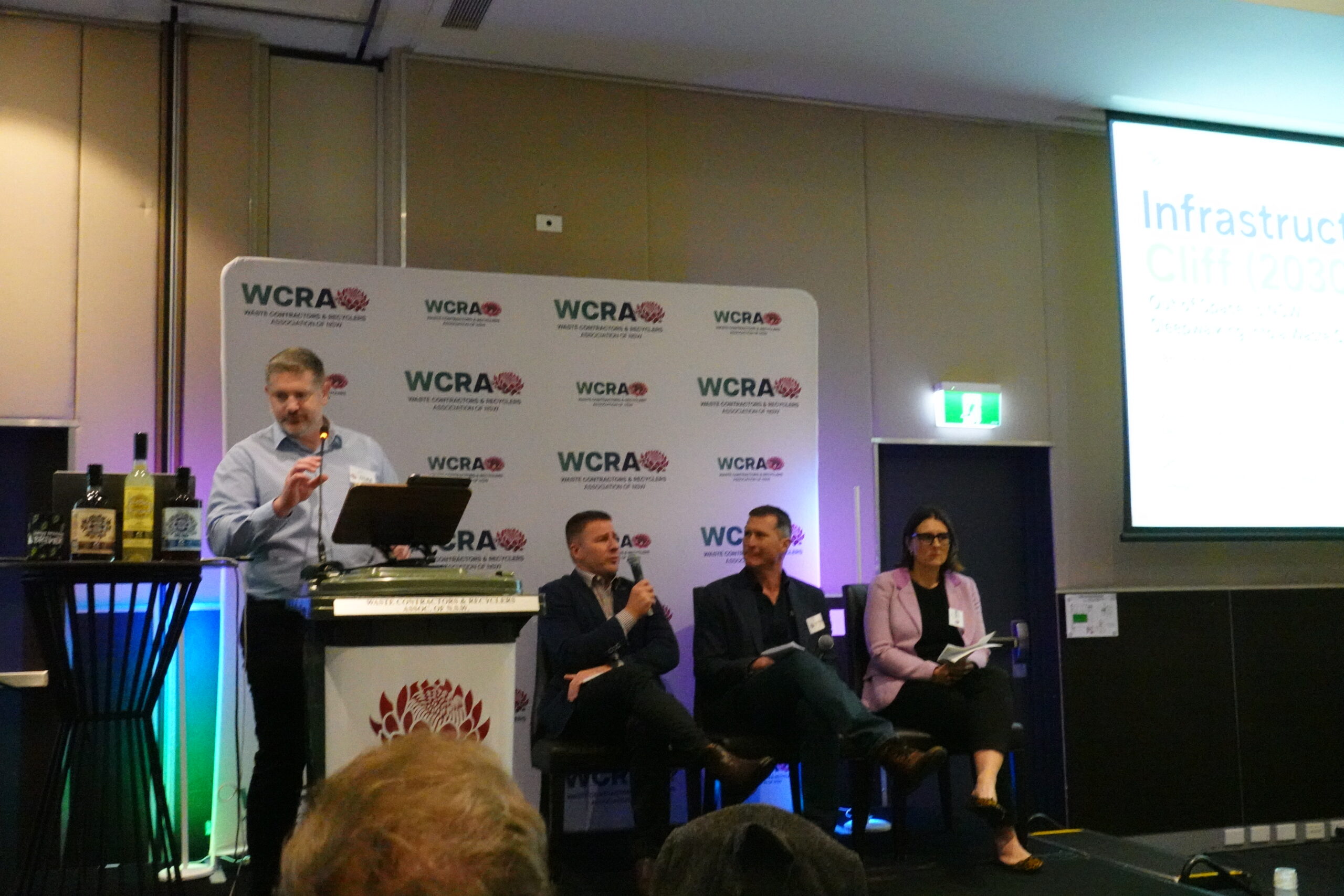
In June 2026, our CEO Damien Vella joined the panel at the Waste Contractors and Recyclers Association (WCRA) Industry Conference at Rydges Hunter Valley, alongside Brad Searle from Bingo and Carmen Loecherer from Veolia.
The panel addressed one of the most significant challenges facing the New South Wales waste and resource recovery sector today: “Infrastructure Cliff 2030, Out of Space, Is NSW Sleepwalking Into a Waste Crisis?”
The Infrastructure Cliff 2030
The panel’s central subject was the landfill capacity shortfall facing Greater Sydney within the next four years.
By 2030, Sydney is projected to face a shortfall of 1.1 million tonnes of annual landfill capacity. That figure covers all waste streams. Household, commercial, and construction and demolition. It is not a distant policy discussion. It is a real capacity constraint that will begin affecting projects, contracts, and disposal costs across the industry within the current decade.
Damien’s contribution to the panel focused on three arguments that Breen Resources has been making publicly for some time.
Planning priority for waste infrastructure. New waste and resource recovery facilities in New South Wales face planning timelines that are inconsistent with the urgency of the capacity problem. The sector needs recognition that new infrastructure is essential, not optional, and the planning framework needs to move at the same pace.
Buffer protections for existing facilities. Established resource recovery facilities operate in locations that predate much of the surrounding development. Ensuring appropriate buffer protections is essential to keep those facilities operating without pressure from encroaching land uses.
Critical Economic Infrastructure status for the sector. Waste and resource recovery is essential infrastructure in the same category as water, energy, and transport. It needs to be recognised, planned, and protected as such.
Reforms already moving
In the same week as the WCRA panel, the New South Wales Environment Minister announced a series of reforms to the waste sector. The reforms include:
– Closing the interstate levy loophole that allowed material to be transported to Queensland for cheaper disposal
– Establishing a Waste Infrastructure Concierge to fast-track new facility approvals
– Creating a Strategic Waste Infrastructure Ministerial Advisory Committee
These reforms represent significant progress on issues the sector has been raising for years, and align closely with the arguments Damien and other panellists put forward at the Hunter Valley event.
Continuing the conversation
The WCRA panel is one example of a broader shift in how the waste and resource recovery sector is being talked about at industry and government level. Damien has also been accepted as a Master Builders Association New South Wales speaker on “Waste, Risk and Your Bottom Line”, extending the conversation directly into the construction sector where it has the most immediate impact.
At Breen Resources, we will continue to contribute to these conversations wherever we can. The Infrastructure Cliff 2030 is not a problem that any one operator can solve alone. It requires coordinated action across the sector, government, and construction industry.
The conversations are now moving. That is a good thing.
For media enquiries or speaker requests, contact our team on info@breen.com.au.